
Parasailing Off Palm Beach: What It Actually Feels Like the First Time
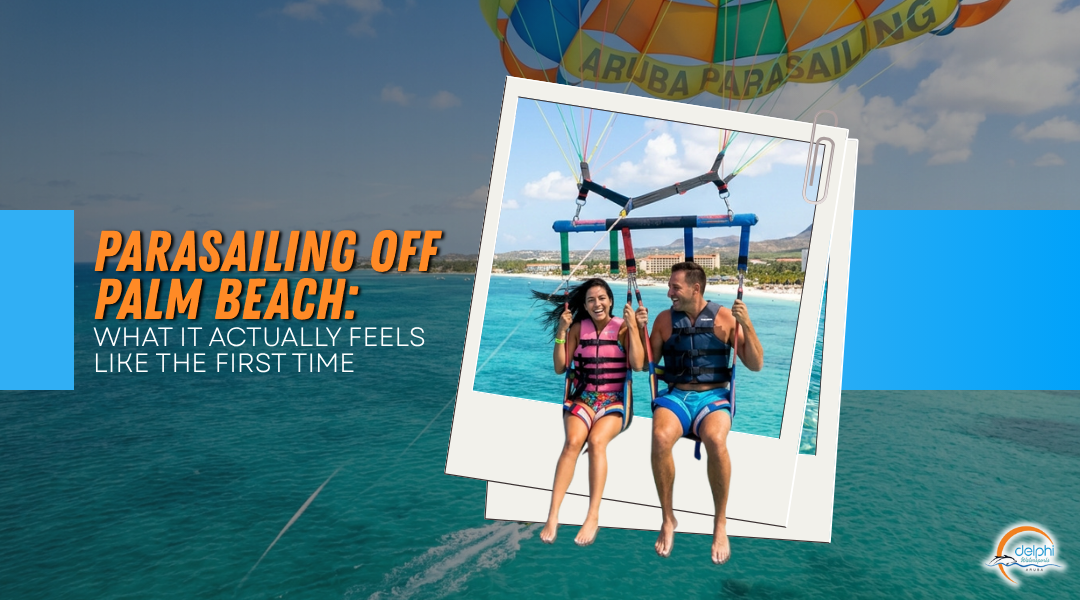
Most people book parasailing expecting a fairground ride. It isn’t one. There’s no running start, no jumping, and nothing to hold onto for dear life. The boat does the work, the beach quietly gets smaller, and the thing everyone mentions afterward is how calm it was.
The loud part is the boat. Once the line pays out, it goes almost silent. We fly guests off the sand in front of the Hyatt Regency on J.E. Irausquin Boulevard, and it’s the activity we recommend most often to people who tell us they’re nervous about the water. October is a good month for it — the beach is still quiet ahead of the December-to-April rush, and the light in the late afternoon is the best of the year.
Quick Summary: Key Takeaways
- It’s calmer than it looks: no running start, nothing to steer, nothing to hold onto.
- It’s quieter than you expect: the engine noise drops away as the line pays out behind the boat.
- Wear less, not more: swimwear, a strap on your sunglasses and sunscreen on before you board.
- Leave the phone in the bag: anything not attached to you is going in the sea.
- Late afternoon is the light: in mid-October the sun sets over the water at 6:21 p.m.
The Boat Does All the Work
Most of the nerves are about the wrong thing. People arrive braced for a rollercoaster and get something closer to a chairlift — steady, quiet, and entirely out of their hands. There is nothing to pull, nothing to steer and nothing to correct.
Ask your questions on the sand. How your flight will run, what happens at either end of it, whether two of you can go up together — that is a conversation to have with the crew when you book, and it settles a first-timer faster than anything written down. Guests who won’t get on a jet ski happily do this twice.
What You Actually See Once You’re Up There
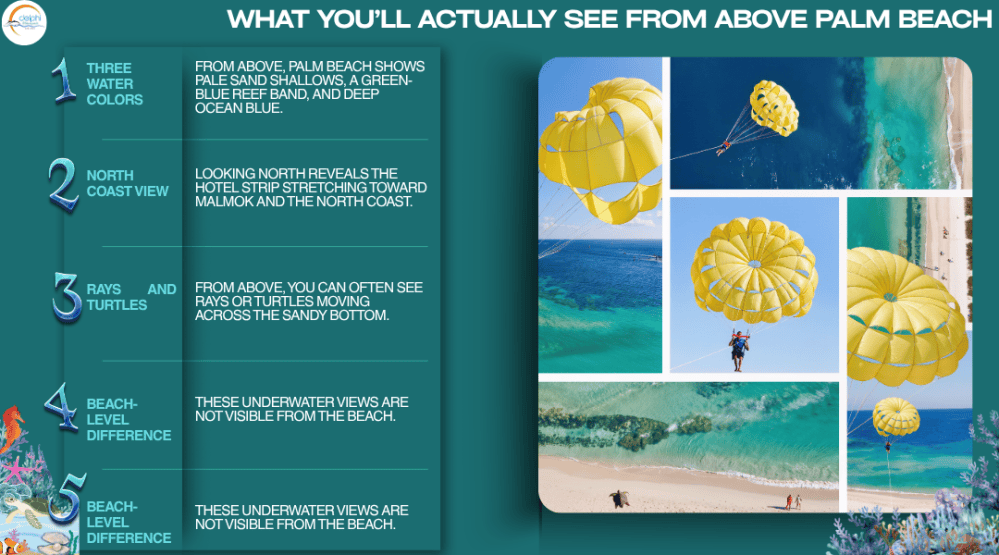
The view is the reason to do it. Not the beach — the water. From above, the shelf off Palm Beach reads as three distinct colors: the pale sand shallows, a green-blue band over the reef, then the hard line where it drops into deep ocean blue.
Look north and the hotel strip runs out toward Malmok and the low scrub of the north coast. Look down and you’ll often see rays or a turtle moving over the sand, which nobody on the beach can see at all. Nobody comes back down talking about the boat. They talk about the water for the rest of the week
What to Wear and What to Leave Behind
Keep it simple. Swimwear, sunscreen applied before you board rather than on a moving boat, and sunglasses with a strap if you’d like to still own them at the end of the afternoon. A hat only if it fastens.
The rule we repeat most is about phones. If it isn’t attached to your body, assume the sea gets it, so hand cameras and phones to whoever stays on the beach or leave them in a bag on the boat. And if you’re planning a whole afternoon on the sand, a beach umbrella and two chairs cost less than replacing a phone.
The Hour You Book Changes the Experience
Mornings are the flat, glassy option. Good if you want the calmest possible flight. Late afternoon is the one we’d pick, because the light goes gold and the color contrast in the water is at its strongest.
Timing matters more in autumn than in June. By the U.S. Naval Observatory’s sun tables, the sun sets over the water off Aruba at 6:21 p.m. in mid-October, with the last usable light around 6:43. We’re on the beach daily from 9 to 5, so the final flights of the day land into exactly that light.
Most People Pair It With Something Faster
Parasailing doesn’t fill an afternoon. Which is why almost nobody books only that. The obvious partner is a waverunner — the flight is the calm half, the jet ski is the loud half, and doing them in that order works better than the reverse.
Families more often add a tube ride, which turns the same boat into the entertainment for the smaller members of the group. Book them together and it’s one trip down to the beach instead of two.
Frequently Asked Questions
Q: Is parasailing in Aruba safe for beginners?
A: It’s one of the gentlest things you can do on the water. There is nothing to steer, nothing to pull and no skill asked of you at any point. If you want to know exactly how your flight will run, ask the crew when you book — they would far rather answer that on the sand.
Q: Where do you fly from on Palm Beach?
A: From the sand in front of the Hyatt Regency Hotel on J.E. Irausquin Boulevard. We’re on the beach daily from 9 to 5, so you can walk up, look at the boat and ask whatever you want before booking anything.
Q: Should I book parasailing early in my trip?
A: Yes, and for one reason: people want to go up a second time. Book it in the first day or two and there’s room in the week to do that. Leave it until your last afternoon and the weather gets a vote you can’t argue with.
Q: What is the best time of year to go parasailing in Aruba?
A: Aruba works year-round. October and November are the quiet, better-value end of it — showers pass over and clear, the beach is nothing like as busy as it gets, and the late-afternoon light is the best of the year. December through April is the peak, and it feels like it.
Come Find Us on the Sand
We’ve been running watersports off this beach since 1992, and parasailing is still the one guests come back down the sand to book a second time. If you’ve never done it, do it early in your trip. You’ll want the second flight.
Delphi Watersports, on the beach at J.E. Irausquin Blvd in front of the Hyatt Regency Hotel, Palm Beach, Noord, Aruba. Open daily, 9:00 AM to 5:00 PM. Book online at delphiwatersports.com.